
AI in Mental Health: A New Hope in the Ongoing Crisis
Mental health challenges have become one of the most pressing global issues of our time, affecting people of all ages, backgrounds, and lifestyles. Rising stress levels, anxiety, depression, and burnout—driven by fast-paced living, social pressure, and constant digital exposure—have placed immense strain on traditional mental health systems. In many regions, limited access to professionals, high treatment costs, and lingering stigma prevent people from seeking timely support. This is where artificial intelligence (AI) is emerging as a powerful ally in mental health care. AI is not designed to replace therapists or human connection, but to support and enhance existing systems. From AI-powered chatbots and mood-tracking apps to data-driven early detection tools, technology is helping identify mental health risks and provide timely guidance. This blog explores how AI is becoming a new hope in addressing the ongoing mental health crisis and reshaping the future of mental well-being.
Understanding the Current Mental Health Crisis
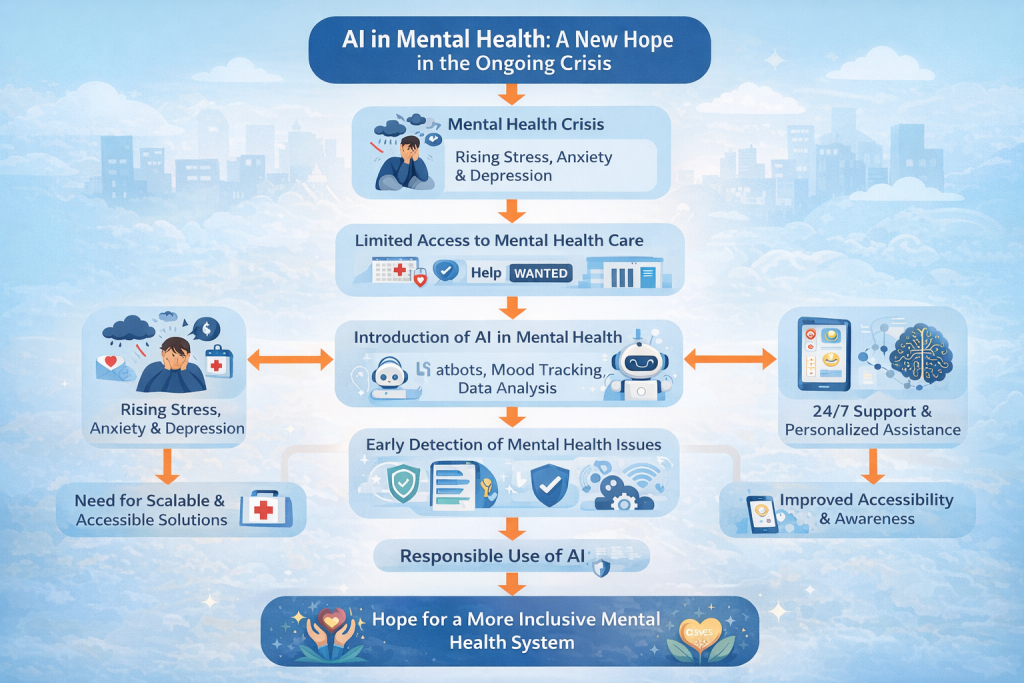
Mental health issues have increased significantly in recent years, affecting individuals across all age groups and social backgrounds. Factors such as work pressure, financial stress, social isolation, digital overload, and global uncertainties have contributed to rising cases of anxiety, depression, and burnout. Despite growing awareness, many people still struggle to access timely mental health support due to high costs, lack of professionals, long waiting periods, and social stigma surrounding mental illness.
The demand for mental health care has far exceeded the capacity of traditional systems. In many regions, especially developing countries, mental health services remain underfunded and inaccessible. This gap has created an urgent need for innovative solutions that can support early identification, reduce barriers to care, and provide scalable assistance. Understanding the depth of this crisis is essential to recognizing why alternative approaches, including technology-driven solutions like AI, are becoming increasingly important.
How AI Is Being Used in Mental Health Care
Artificial intelligence is being integrated into mental health care in various practical ways. AI-powered chatbots and virtual assistants offer immediate emotional support, helping users manage stress, anxiety, and negative thoughts through guided conversations. Mood-tracking apps analyze user behavior, sleep patterns, and emotional inputs to provide personalized mental health insights and coping strategies.
AI is also used by professionals to analyze large amounts of data for identifying mental health risks and treatment patterns. Machine learning tools can assist therapists by tracking patient progress and highlighting behavioral changes that may require attention. These applications do not replace mental health experts but act as supportive tools that enhance care efficiency, accessibility, and consistency.
Benefits of AI for Early Detection and Support
One of the greatest advantages of AI in mental health is its ability to support early detection. By analyzing data such as speech patterns, social media behavior, and activity levels, AI tools can identify early signs of emotional distress that might otherwise go unnoticed. Early detection allows individuals to seek help before conditions become severe.
AI also provides continuous and non-judgmental support, making it easier for people to open up about their feelings. With 24/7 availability, AI-based tools offer immediate assistance during moments of stress or crisis. This accessibility reduces dependency on limited human resources and helps bridge gaps in mental health care, especially for those hesitant to seek traditional therapy.
Ethical Concerns and Limitations of AI in Mental Health
Despite its benefits, the use of AI in mental health raises important ethical concerns. Data privacy and security are major issues, as mental health information is highly sensitive. Ensuring that user data is protected and used responsibly is essential to maintaining trust in AI-based systems.
Another limitation is the lack of human empathy. While AI can simulate supportive conversations, it cannot fully understand emotions or replace genuine human connection. There is also a risk of over-reliance on technology, which may delay professional intervention when it is truly needed. Addressing these concerns through ethical guidelines and human oversight is critical for responsible AI use.
The Future of AI in Improving Mental Well-Being
The future of AI in mental health looks promising as technology continues to advance. Improved algorithms and data integration will enable more accurate assessments, personalized treatment recommendations, and predictive mental health insights. AI is expected to play a key role in preventive mental health care by identifying risks early and promoting proactive well-being practices.
Collaboration between AI developers, healthcare professionals, and policymakers will be essential to maximize benefits while minimizing risks. When used responsibly, AI can complement traditional therapy, expand access to mental health resources, and reduce stigma by normalizing mental health conversations. In the long run, AI has the potential to create a more inclusive, accessible, and supportive mental health ecosystem.
Conclusion
AI is steadily transforming the way mental health care is delivered, offering innovative solutions to improve accessibility, awareness, and early intervention. By supporting mental health professionals, enabling round-the-clock assistance, and providing personalized insights, AI helps bridge critical gaps in mental health services. While human empathy and professional care remain irreplaceable, AI serves as a valuable tool that empowers individuals to better understand their emotional health and seek help sooner. At the same time, ethical use, data privacy, and responsible implementation must be prioritized to build trust and ensure effectiveness. As technology continues to advance, the collaboration between AI and mental health experts holds immense potential to create a more inclusive and proactive care system. In the face of a growing mental health crisis, AI represents not just technological progress, but a meaningful step toward hope, support, and improved mental well-being for millions.
For more insightful health and lifestyle content, explore Life Tips and Ideas, and if you’re passionate about wellness topics, contribute your ideas through our Health Write for Us section.