
Simple Protein Habits to Add to Your Daily Diet
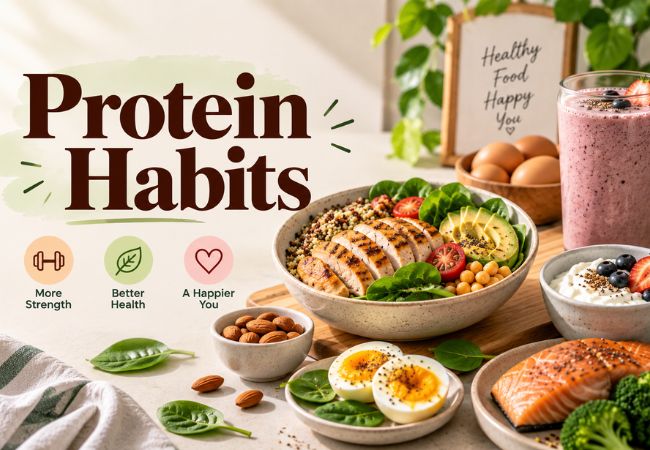
Protein habits are small, repeatable choices — not a strict diet plan. Since the body can’t store protein for later, whatever isn’t used right away for muscle repair or immune function gets used for energy or removed. That’s why spreading protein across the day matters more than one big protein-heavy meal. This fits neatly into a bigger idea worth exploring — how small daily habits can make your life better — since protein intake is really just one small, repeatable habit among many that quietly shape long-term health.
How Much Protein Do You Really Need Each Day?
The baseline RDA is about 0.8g of protein per kilogram of body weight, according to Healthline — the minimum to prevent deficiency, not an optimal target. For a 70kg person, that’s roughly 56g a day. Updated dietary guidance now suggests a higher range of 1.2–1.6g per kilogram for better muscle and long-term health support. Needs rise further with age — the British Heart Foundation advises people over 65 aim for 1–1.2g per kilogram to help offset natural muscle loss. There’s no single “correct” number, only a range shaped by weight, activity, and life stage.
Easy Protein Habits to Build Into Your Morning Routine
Breakfast is where protein intake falls shortest most often — toast, cereal, and pastries are quick but low in protein. Research shows meals with 20–30g of protein create noticeably stronger fullness than lower-protein options, and one Aarhus University study found a protein-rich breakfast improved both satiety and concentration. According to Phelps Memorial Health, protein in the morning also helps regulate blood sugar and appetite hormones, reducing cravings later in the day. In practice: eggs with toast, a Greek yoghurt bowl, or a lentil chilla — no elaborate prep needed.
Simple Ways to Add Protein to Every Meal
Spread protein evenly across meals instead of loading up at dinner. One study covered by mindbodygreen found women who spread protein evenly ate roughly 40% less snack food than those who loaded most of it at dinner. Neulife notes the body can only use about 30g efficiently per sitting, so 20–40g per meal supports muscle repair better than one large dose. A habit borrowed from tradition, as Medanta explains: pairing rice with dal, or roti with rajma, combines incomplete plant proteins into a complete one.
High-Protein Snack Habits for Busy Days
On busy days, the habit that matters is having a go-to snack ready, not reaching for whatever’s convenient. Roasted chana, nuts, Greek yoghurt, or hummus with vegetables all add protein without prep time. As LVJCO’s protein guide notes, seeds are especially worth keeping on hand — loaded with protein, healthy fats, and fibre, making them a genuinely easy daily habit. Worth noting: reaching for Indian sweets satisfies a craving but adds little protein — a reminder that “filling” and “protein-rich” aren’t always the same thing.
Protein Habits for Vegetarians and Vegans
Getting enough protein without meat is achievable with one key habit: variety. As Medanta and US News both note, most plant proteins are “incomplete,” low in one or more amino acids — not less valuable, just needing variety across the day. Strong options include lentils (~18g per cooked cup), tofu, tempeh, chickpeas, and paneer or yoghurt for those who eat dairy. Cramming protein into one meal is less effective than spreading it across three or four — true for everyone, but it matters slightly more here since plant proteins are typically less concentrated per serving.
Common Protein Mistakes to Avoid
According to The Organic Protein Company, the most common mistake isn’t eating too little protein — it’s timing. Low protein at breakfast, moderate at lunch, high at dinner creates long stretches without proper support for muscle repair, mindbodygreen confirms. Another trap: underestimating portions — a smoothie can look filling but contain very little actual protein. Some people also overcorrect and fear “too much” protein — registered dietitians cited by AOL note higher-protein diets are usually safe as long as other nutrients aren’t crowded out.
How to Make Protein Habits Stick Long-Term
Habits that last require the least ongoing decision-making. Anchor a protein source to a meal you already eat — adding eggs to your existing breakfast — rather than building an entirely new routine. As Neulife puts it, most people struggle not from imperfect timing but from protein being inconsistent day to day. This is the same principle behind other sticky lifestyle changes — even a digital detox works best as a small, anchored daily habit rather than a dramatic overhaul. Solve for consistency first.
Frequently Asked Questions
Q1. How much protein do I need per day?
Roughly 0.8g–1.6g per kg of body weight, depending on age and activity level.
Q2. Is one big protein meal enough, or should I spread it out?
Spread it out — the body uses about 30g efficiently per sitting.
Q3. Can vegetarians get enough protein without supplements?
Yes, with variety — lentils, tofu, dairy, and legumes cover it well.
Q4. What’s the easiest habit to start with?
Add protein to breakfast first — it’s the meal most people under-eat it at.